Sunday, April 23, 2023

The U.S. Migrant Issue. Record Number Yet Unmoving.

Posted on Facebook, Oct 2022. Pasckie Pascua. 


THE NEWS. “New York Faces Record Homelessness as Mayor Declares Migrant Emergency.” / “In Record Numbers, Venezuelans Risk a Deadly Trek to Reach the U.S. Border.” 


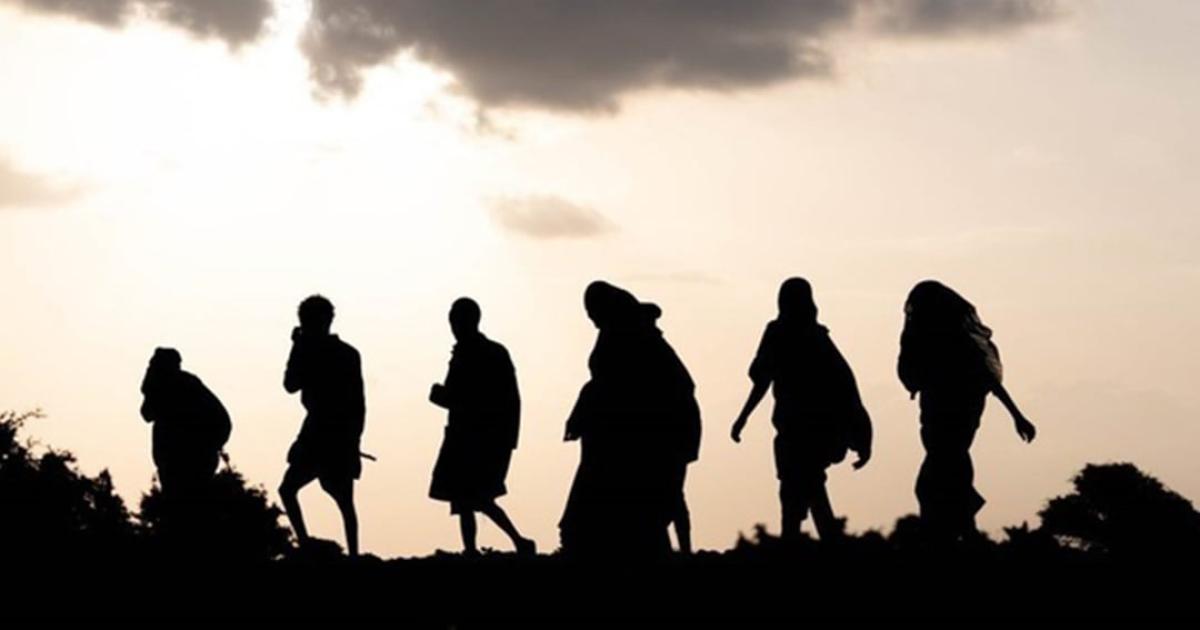
New York City Mayor sends SOS for state and federal aid as the number of people in city shelters topped 61,000. And the migrant trek seems endless on Bidentime.

       New York Times adds: “Two crises are converging at the perilous land bridge known as the DariĆ©n Gap: the economic and humanitarian disaster underway in South America, and the bitter fight over immigration policy in Washington.”

       That is the main issue: Clashing immigration policy. And as a common fix is in discourse, relative laxity pervades on the borders. That’s despite after President Biden set the admission cap at 125,000 last year to keep pace with the 2023 budget. Middle of last year, the U.S. Border Patrol reported nearly 200,000 encounters with migrants along the U.S.-Mexico border, the highest monthly total in more than two decades.

       And the record number of arrivals keeps on. I lost track of the figures since another all-time high stat was again registered about a month ago. 


FUNDING refugees has evolved into a fiscal management bottleneck than a quixotic humanitarian aid. The Office of Refugee Resettlement provides resources for refugees, asylum seekers, and other new arrivals to the U.S. to assist with their integration into their new community.

       In Fiscal Year 2019, Refugee and Resettlement Assistance comprised a discretionary budget of $1.905 billion. Under FY 2022 funding, each refugee is provided $1,225 per capita grant. From the date of granted asylum, asylees may receive up to 12 months of aid to help meet their most basic needs, such as food, shelter, and transportation. Other sources give a higher number. Children or Unaccompanied Alien Children receive a much higher grant.

       Since FY 2008 there has been a seventeen-fold rise in the numbers of border apprehensions who are unaccompanied children. With rising overall apprehensions, this represents a striking eight-fold increase just between FY 2008 and FY 2019 in the proportion of all apprehensions who are unaccompanied children. There has also been a striking five-fold rise in all children when both unaccompanied and accompanied children are considered.

       Of course, that is expected. Until the U.S. government rework its immigration policy and corresponding relations with Latin American governments, this trend is expected to carry on. But first, legislature needs to set aside party narcissism and arrive to a common agenda. 


Mergers & Acquisitions: A Trend That is Bound to Carry On.

Posted on Facebook, Oct 2022. Pasckie Pascua.


THE NEWS. “What the $24.6 Billion Kroger-Albertsons Merger Could Mean for Groceries.” / “As Fox and News Corp Weigh Merger, an Activist Has Its Own Vision.”


Mergers and Acquisitions. Old, new story. As inflation continues to drive food prices up, and as e-market topnotchers Amazon and Walmart continue to rule retail, Kroger and Albertsons, two of the largest U.S. supermarket chains, move to link up as one.

       Meanwhile, in a related news, in high-end communication galaxy, Irenic Capital Management, which has a $150 million stake in News Corp, wants the company to split up its media and real estate listings businesses. But then, who cares, LOL! M&A is the name of the Fortune 1,001 game—and it seems working, or no brainer. It’s obviously win-win for the 1 Percent Capitalist.

       In 2021, there were 676 merge and acquisition transactions in the U.S. valued at more than $1 billion. Overall, the number of M&A deals last year was 21,107, up from 15,103 in the previous year. For this year, so far, companies have announced slightly more than 22,000 M&A deals, with a total value of $1.85 trillion. 


THE M&A trend is bound to carry on and expand since consolidation (of market share) etcetera work/s for giant corporations or leading franchises. Let’s (re)check the ups.

       A larger business, or one that has joined forces with another business, typically has higher needs in terms of materials and supplies. Purchasing necessary raw materials and/or supplies at larger volumes results in cost efficiency. Significantly, companies joining up means lower labor costs. Multiple staff members doing the same job at each individual company equals lower overhead and operational costs. By eliminating extraneous staff, a business can reduce its overall labor costs while maintaining a stronger, more effective labor force.

       Another: Increased market share by tapping into the resources that both bring to the business deal. This can help companies offer more products to consumers. And so on and so forth. 


SO what’d be the disadvantages of mergers and acquisitions? I don’t know. Start googling. Let’s simplify beyond Mergers & Acquisitions to a similar corporate trick that leave SMEs’ back up against a wall.

       Buyout. Example: If my tiny but thriving entrepreneurial venture which probably earns a few thousands of dollars each month is approached by a giant (who also do the same business, somehow) and is offered $25 million to gobble me out? Or maybe they’d instigate an internal tempest and then my employees threaten me all kinds of (il)legal stuff? What must I do?

       So why not just buy my company? LOL! Maybe you’d say I am a sell-out, right? But then isn’t that happening all over? Let’s start with Adam Neumann, ex-CEO of WeWork. He didn’t really “fall” as media put it. You may look up what he has been into after his supposed “ruin.” More companies!

       Yes, in his regard, why merge? Buy me out. Done. Then I will start a new kickass outfit. Fun!


Monday, May 16, 2022

Weighing in on the Depp Heard Drama


I NORMALLY don’t discuss people’s lives—especially celebrities and politicians—beyond their work. But the Johnny Depp/Amber Heard courtroom skirmish touches several subject matters of (societal) interest so let me try. I don’t watch the TV coverage or click on the YouTube snippets of the Virginia trial. But based on my Homepage soiree of sorts, seems like Johnny gains more credibility traction over his ex-wife.


       But “winning/losing” in this high-end drama, despite an eventual verdict, is nonsensical since I feel both already lost. If the case ended after divorce and the $7 million settlement (awarded to Ms Heard), then this “thriller” would have been consigned as simply another glossy break-up story. So many of those!

       Last that I read is Mr Depp was taken out of the 6th installment of the “Pirates of the Caribbean” Capt. Jack Sparrow. Johnny was to earn $22.5 million to reprise his role but, quite obviously due to the court hassle, producer Disney decided to go in a "different direction." There are reports that a female-led spin-off is on script development, with Margot Robbie attached to star. Hmmm. There you go.

       Check this though. The franchise has grossed over $4.5 billion worldwide, with Depp as its focal seller. Retail sales of merch, which is again anchored on Johnny as Jack, has so far brought $1.6 billion globally. Well, Johnny is out of Part 6 but, reports say, they are not pulling out his obvious likeness to the merchandise. Uh huh. Do away with the sexual politics-induced controversy but keep the profit? Johnny Depp should sue Disney, you reckon?

       Meantime, Johnny’s fans are all-out on a campaign to oust Amber from the cast of “Aquaman,” the highest-earning movie that she’s been involved with. But then “Aquaman” is Jason Momoa’s gig. Did Amber date Jason as well? LOL! 


FIRST, you know Mr Johnny Depp. But many non-rabid film hounds ask, “Who is Amber Heard?” I understand. Heard of her? Nope? Quite definitely, Amber is far from the Meryl Streep, Julia Roberts, Jennifer Lawrence megastar category, as we are wont to place Johnny on the male side.

      Yet Ms Heard is not even near the circle of Elisabeth Moss, Rachel Brosnahan, and Sarah Paulson. Some of her movies: Drop Dead Sexy, North Country, Side FX, London Fields, The Adderall Diaries, Price to Pay, You Are Here, and Alpha Dog. Probably you’ve heard of those but would say, “…she was in those movies?” The most popular megahit that Amber Heard was in: 2018’s “Aquaman.” She was also with ex-hubby Johnny in 2011’s “The Rum Diary.” But did you notice her there?

       So it’d be safe to say that Amber Heard got famous when she married John Christopher Depp II in 2015. And she got richer, too. I don’t know how much she was making before the A-1 marriage but per most recent data place/s her 2021 net worth at $2.5 million, though I’d dispute that considering the $7 million that she received per divorce settlement in 2017. Meanwhile, Mr Depp is worth more than $100 million.

       Reason why I seem to articulate the $ matter is obvious. This high-end drama is all about money. Second would be politics as in MeToo pitch or sexual politics showtime a.k.a. cancel culture fodder to many. 


GOTTA be honest. It is not hard to believe that Mr Depp could temporary lose his sanity per alcohol abuse and drug frolic, which isn’t really new/s among the rich and famous. Perpetrator, victim—both mind-altering intoxication pervade. Meantime, years before Johnny upped his asking price to double-digit millions, he already got bad-boy smear all over his face. Life with Winona Ryder and Kate Moss, for example.

       Hence a divorce sought by Amber Heard in 2016 was a no-brainer. She cited domestic abuse; she received a $7 million settlement from Depp when the divorce was finalized. Amber then vowed to donate the settlement to charity, specifically to the Children's Hospital of Los Angeles and the ACLU.

       From that point, it could have been over. Who cares who was telling the truth, right? This is Hollywood. And the verdict has been handed already. Johnny continues being Jack Sparrow and, in between, giggin’ and rockin’ with the Hollywood Vampires. Amber got a start-over and new, better film roles, perhaps.

       But nope.

       Amber had been lying about donating the money to charity. The L.A. Children's Hospital reported to have only received $100,000, which would be around $3.4 million shy of her allegedly promised donation. In April 2022 court testimony, ACLU testified that the organization had received a total of only $1.3 million of Amber's pledged $3.5 million.


      At the same time, testimony revealed that of the $1.3 million, Amber personally provided just $350,000 directly while $100,000 came from Depp and $500 thousand actually came from Elon Musk, another of Amber's former romantic partners. Ooops, Elon? 

MATTERS could have been over after the divorce settlement. But then Amber Heard wanted more, actually. In 2016, Ms Heard filed for spousal support after separating from Johnny Depp. According to court filings, in May 2016 Amber's lawyers offered to "keep this matter out of the spotlight" if Johnny allowed her to continue to use a Range Rover, to continue living in three of his Los Angeles penthouse apartments and to receive $125,000 for legal and accounting expenses.

       Next Amber reportedly asked for $50,000 per month from Depp to cover various expenses. Court documents revealed that according to Heard, her monthly expenses included costs like $10,000 for rent, $2,000 a month for eating out, and $10,000 for pet supplies and legal costs. She backed up her effort by claiming she was making a very small income, including $27,000 in royalties from various films.

       I guess, that was before the divorce?

       Okay. But the act that got Amber Heard deep in trouble was when Johnny Depp filed a lawsuit in the United Kingdom against News Group Newspapers, publishers of The Sun which referred to him as a "wife beater" in an April 2018 article. The lawsuit went to trial in 2020. Both Heard and Depp testified for several days. In November 2020 a judge ruled that 12 of the 14 incidents of violence that Heard reportedly claimed to have incurred were "substantially true." Depp lost an appeal in March 2021.

       Till the case went to the U.S. in 2019. Johnny sued Amber Heard for defamation in Virginia. He sought a settlement of $50 million as a direct response to an op-ed Amber Heard had written for The Washington Post (the same article as in The Sun?) in December 2018 that detailed the alleged abuse she suffered. That’s where we are now. 

NOW the drama is a TV spectacle and social media fodder. Sure, Johnny Depp’s fame elicited massive support his way. That is a no brainer. I don’t think Aquaman will come to Amber Heard’s rescue, anyways. Yet we still have to hear the final word or verdict.


       This side projects Mr Depp as a victim based on what I just typed up. Makes me think, what if Amber and Elon Musk actually got married? Amber should have hushed after the 2016 divorce settlement and handed what she promised Children's Hospital of Los Angeles and the ACLU. And then went to honestly work for her own keep.

       But it seems she has a lavish lifestyle to support as well—so she won’t let Johnny be. Again, I believe that Mr Depp was abusive when drunk or drugged and because of that, a divorce happened and $17 million was handed Amber.

       Thing is, why’d she pledge the money to charity when she knew she needed them most? You know what I’m saying? Now of course MeToo etcetera will probably take her case up as a political statement.

       Oh well.

       Okay, if ever the case is dismissed, which I hope it will—since I don’t want Amber to pay when she couldn’t, good. Just let this go, move on. But hey I am more interested in Mr Depp suing Disney! More to come?

Tuesday, May 18, 2021

The Filipino Overseas Worker: Lost in a Journey of Promises, Pragmatism, and Payroll

Seafaring People, Overseas Toilers 

WHEN the Philippine government, under President Fidel V. Ramos, enacted Republic Act 8042 also known as the Migrant Workers and Overseas Filipinos Act of 1995, the term "Overseas Filipino Worker" or OFW sounded like a typical socioeconomic imperative. Filipinos embraced as a cultural obligatory. Cold as gut-level pragmatic as you can get. Historical precedence attests to the evolving fact. Filipino migrants were already working outside the archipelago as early as the 1900s or maybe even before Spanish colonization commenced in mid-14th century. 

             However, it was only around the time following the end of the Spanish-American War and the ensuing handover of the Philippines to the United States by Spain as per Treaty of Paris that year that the long road of overseas toil for Filipinos was ushered. Farmworkers were deployed to Hawaii to serve labor needs in the U.S. territory's agriculture, then onto the mainland. Filipinos worked in hotels, restaurants, and sawmills, as well as in railroad construction and plantations in California and the canning industry in Alaska. Of course, they also served in the U.S. Army during World War II.


From that point, the exodus of Filipinos abroad carried on, nonstop. From America to Europe, back to neighboring Asian countries. When oil diggings started to thrive in the Middle East, Filipino workers and professionals also began to be recruited by multinational companies in the Gulf—in the same way that nurses were in high demand. From 7,000 Filipino nurses in 1948, the number massively increased to 57,000 in 1953. With such demand and opportunity to go to America, nursing schools in the Philippines ballooned rapidly.

Fast forward.

As per Overseas Filipinos Act of 1995 the sendoff seemed unrelenting. That’d be besides the fact that when Corazon Aquino promised a million jobs as part of economic recovery, post-Ferdinand Marcos regime, in late 1980s, those employments were actually located in the Middle East. Washington’s USAID, plus IMF/World Bank and other economic aid and financial grants from mostly European institutions, arrived but seemingly not enough to distract the Filipino’s focused fascination with the sparkling enticement of “dollars/rials earned” abroad.


The Middle East and Elsewhere 

FROM the first Filipino arrivals of a few thousands in the Middle East in the 1970s, mainly processed by the Philippine Overseas Employment Administration under Marcos' labor policy, the number skyrocketed to over 8 million in the 1990s. By 2010s, almost 50 percent of all OFWs are concentrated in the Middle East, mostly in Saudi Arabia. However, in the last 5 years or so, numbers fell. After years of continuous growth, the deployment of Filipino workers to the Gulf went down by 9 to 10 percent in 2017; tally dwindled to 2.2 million or 22.4 percent of the total remittance-sending workers overseas.

Several reasons attribute to the outflow. Significant economic changes in the MidEast region swung with regional political power change-ups while oil sheiks diversify from merely petroleum export reliance. But that doesn’t mean the OFW was coming home for good. With bleaker prospects for skilled Filipinos in the Middle East, these workers are now looking at other countries that are short of skilled professionals, like Japan, South Korea, and China.


For example, as per part of the Japan-Philippine Economic Partnership Agreement signed at the time of President Gloria Arroyo in 2006, some 2,200 nurses and caregivers flew to Japan to help take care of the country’s ageing population. Then more farmers, construction workers, shipbuilders and professionals in the hospitality sector followed to serve in various industries in the ensuing years.

That time, OFWs were still flying to other MidEast countries which needed more IT technicians, computer engineers, doctors and nurses. Similarly, the Chinese education sector also announced vacancies for 100,000 Filipino teachers to teach English in the mainland.
Hence while OFW is often used to refer to Filipino migrant workers who reside in another country for a limited period of employment, the phenomenon evolved into a cultural fact. Latest modest data infer/s that there are over 10 million Filipinos working abroad, making the Philippines "one of the biggest export countries of labor.”


Reliance on Remittances 

FACT is, despite a huge cut in OFWs in the Middle East and North Africa, personal remittances from overseas Filipino workers per se remained steady owing to Filipinos’ incessant search for employment alternatives beyond the Gulf. Money sent from overseas reached a record high of $33.5 billion in 2019, 3.9 percent higher than the $32.2 billion recorded in 2018, when OFW remittances accounted for 11 percent of the total GDP. Clearly, the Philippines is one of the top 5 economies in the world that benefit the most from remittances.

Such a fact easily affects how leadership deals with regional/global trade negotiations and internal financial/economic management. Either the government got complacent with management what it has home-based or administration sunk deeper to a kind of inertia of waiting for foreign, and of course, OFW remittances. The end justifies the means. Homes got empty of parenting intimacy and families sunk to dysfunction. But the emotional vacuum was largely unnoticed or ignored in favor of economic windfall.


Philippine economy actually improved from Marcos’ last years, when GDP growth posted -7 percent as the dictatorship started to crumble in 1985. From 3.4 percent as Cory Aquino sat in 1986 it was a huge 11 percent in 2000, in Joseph Estrada’s term. In fact, it was a competitive 6 percent in 2019 irrelevant of President Rodrigo Duterte’s PR flak and human rights record.

Then Covid-19 pandemic hit. As expected, growth plummeted to  -8.3 percent in 2020.


Aid, Dole-outs, and Complacency 

MEANTIME, as Covid-19 continues its crawl of horror in the archipelago, with the Philippines lodged in an ignominious spot as #2 hardest-hit nation in Southeast Asia, with 5-figure cases each day, Filipinos ask: Have we saved for rainy rains? After all the islands could be the most disaster-prone geography in the East. Where is calamity preparedness or crisis management? People are both confounded, irked, or lost.


And so we point our fingers at stewardship in relation to/with the Philippines two benefactors, the United States and China. In September last year, pre-U.S. election in November, (ex-President) Donald Trump’s White House and the Duterte government signed a new 5-year $675 aid package. In the last 20 years or from the onset of the new millennia, the U.S. has forwarded a total assistance of $4.5 billion. In 2018, Beijing pledged a $24 billion in development aid, delivery of which is still a huge puzzle.

Given steady foreign investments and development aid plus a relatively healthy economy, the Philippines can actually improve infrastructure for more local jobs. Yet the attraction of remittances stay loud as “dole-out” mentality reigns as ever. Truth from a fact. As unemployment rate soars to 17.7 percent from 2019’s 2.15 percent, the pandemic is largely seen as sturdier rationale to head out than stay put and languish in lockdown funk.

True, President Duterte announced early this year that in 2021 the Philippines would limit the annual number of health professionals (including nurses) it sends abroad to 5,000, from about 13,000 that currently leave every year. How would that play up when medical/healthcare demands have spiked globally due to the obvious?


Promises, Pragmatism, Payroll 

SO we are back where we came in—striding out. The psychological impact of absent parentage in the Philippines has been pushed to the background in favor of economic survival. But are Filipinos “surviving,” really? Despite the huge number of OFWs in the Middle East and elsewhere, most Filipinos, over 4 million are in the United States. Journeying home requires a whole lot of rethinking or a redo of Filipino consciousness inwards. But no matter how Filipinos entertain the emptiness of missing home and attempt to fix it, if leadership stays mired in mixed up scruples (sic) and priorities remain distant from sustainable development as it wrestles with governance morality, where to?  


Meanwhile, the Filipino has got to contend with the pandemic and loss of income. For now. Which ironically finds salvation from relatives abroad. Remittances. Hence the long road home gets longer for the Filipino Overseas Worker. But there is always hope. The Philippines is never short of homegrown resources: World’s #2 producer of pineapple and #3 producer of banana + capability in manufacturing, mining/mineral processing and global competitiveness in pharmaceuticals, shipbuilding, electronics, and semi-conductors. With influx of foreign investment, there is no reason why Filipinos should instead go-national and lessen the seafaring passion.

The Philippines drawback, as ever, is leadership—which could be fixed in next year’s presidential election. The Filipino is still lost in a journey of unending promises, acquired pragmatism, and better payroll—but there is always a way to recourse a direction home. And this could start in 2022.  

Thursday, February 18, 2021

GEORGIA and The Babedawgs of our Life.

My family back home in the Philippines always had a dog. My siblings and their families are what I call “dogcentrics.” Dogs occupy a warm space in the household. But until I lived in North Carolina in my older age, I never had this close intimate interaction with dogs. So close that I treat them like sisters, brothers, bestfriends—like the way I do with human beings that I hold dear. Never I forgot to attend to their needs like I did with my children when they were little, growing up. Feed them on time, walk them on the exact moment/s they prefer/red. I even hand them Christmas gifts each year.


      Without being so dramatic about it, I gotta admit that these dogs and a cat helped me survive being far away from family and country for years…

         The first dog that passed away in my midst was Hershe, a year after I got here. Then few years later, Chloe who valiantly struggled after several “false alarms” and then finally left. Both died mainly due to old age. Georgia is 10 or 11 years old. She was with us since 2010, I think, when she was maybe 2 or 3. I helped train her the basics until she could follow me whatever I asked her to. “Go to your room.” “Be gentle.” “Get in the house.” “Go back to work.” “Stay in your bed.” Etc etcetera. I used to make fun of her super-dramatic wailings each time a member of the house gets home—but we know it’s all sweetness. That we are missed while away and she’s happy that we are home. No more of those and that silence is now a painful hollow in our heart with her absence.


        But what sets Georgia from the rest was her almost “human-like” cool. The peaceful demeanor. She was never aggressive with visiting dogs or cats. Friendly with everybody. She was thrust with hyperactive dogs but she never was provoked to a fight. Or there was only one incident with Chloe in the house when Georgia was a “baby.” From that point, this dog stayed cool. Maybe she was already hurting days ago but chose not to bother us until she couldn’t hold it anymore.

       I am a very pragmatic person, most of the time. It takes effort to shudder my emotional fibers. But this time, my armour is shattered. I felt deep pain when Hershe died and I actually wept when Chloe passed away. But with Georgia, I am still finding myself. It is such a shock.


Georgia was a presence in this house… A presence within, deep inside me.

        Goodbye, my friend! Stay the way you are, wherever.

Wednesday, December 23, 2020

The Philippines on Biden Time: Filipinos revisit self while caught between a rock and a hard place

COVID-19's swath of horror hasn't subsided yet as 2021 enters the glade. The Philippines is the 28th worst-hit nation based on W.H.O. pandemic tally although Asia is the least-devastated region, so far. Meanwhile, the administration of President Rodrigo Duterte stays sunk in a murk of widespread criticism of leadership ineptitude and human rights violations, with or without the coronavirus.


            An utter inability to work around a sociopolitical clime that'd please the Philippines' perennially calamity-battered and culturally fragmented 109.5 million population punctuate the brash head of state's governance as it crawls to its fifth year next summer. Unable to secure affordable vaccine provisions for his disgruntled constituents despite new development aid/s from top benefactor United States last September, Duterte had to suffice, at least for now, with what China's state-owned Sinopharm could offer albeit more expensive that what the U.S./West's Pfizer, Moderna, AstraZeneca et al pegged.

            Of course, Mr Duterte faces a complex and complicated geopolitical chessboard, played with unnerving unpredictability by Washington and Beijing, which only weakens his leverage/s. But Filipinos don't have the patience to pore deeper on the whys and wherefores of the superpower mindgames. The leader's dismissive demeanor is it. Duterte's PR crisis overshoots his officework. good or bad.


The Philippines in a West-East tug of war

THE Philippines' economic growth slipped to 5.9 percent, pre-pandemic 2019, from 2016's 6.9 percent when Duterte assumed office. Although unemployment didn't really change during his time per se compared with his predecessor Noynoy Aquino's last year, at around 5 percent, the current president now faces an almost 9 percent joblessness as he grapples for ways how to work around Covid-19. New daily cases of coronavirus infections are still at 4-digits, 6-digits total. Duterte has to issue a fix right here and right now as his people takes a holiday religious breather.


            Apparently the Philippine President, a favorite trajectory target of global media demonization, needs help more than ever from the country's traditional bestfriend America and its "new" trade buddy, China. Although Japan consistently stays as the Philippines' #2 trade partner behind the U.S. and on top of China, Washington and Beijing are undisputedly the world's top economic movers. Even Tokyo has to navigate how the two powers issue maneuvers and gambits and variations on the board. Yet as ever, the Philippines asks itself: Where to and how's that?

            Duterte's decision to avail of China/Sinopharm's Covid-19 vaccine instead of what the U.S.-controlled Pfizer, Moderna, and three more pharma giants that pursued development of vaccines with Washington funding aid could eventually offer, only accentuates the dire fact that Duterte's back is up against a wall. America or China? For now, he has got to go Chinese, while America cools out of its long-drawn partisanship drama and finally into leadership transition. It doesn't really matter that Beijing's vaccine, reportedly at $145 for two dozes, is more expensive than Pfizer's $19.50/dose. The Philippines has to buy a cure and then resume business, hoping of course, that Sinopharm's cure works.

            So what's up in January 2021 as Joe Biden sits? Let's wait and see.


Washington romance: From dovish Trump to hawkish Biden

THE defeat of trade-dealing Donald Trump to the expectedly "military hard-power" pushing Joe Biden in Nov 3 would mean a bit of a shakedown in upcoming Manila/Washington bilateral talks. Although America's Democratic Party has gained majority seats in the House, the Senate would still be essentially Republican. Expect more virulent bipartisanship headbutts in the U.S. come 2021.


            Despite high-intensity polar extreme murk-throw in America, which makes its #1 "stature" as worst hit by Covid-19 "less urgent," when it comes to dealing with China's obvious expansionism, the U.S. is on-target. At least, in terms of rhetoric. Anti-China zeal is the thingy that both Left and Right agree with. Yet from Bill Clinton's (re)defining trade pact with Jiang Zemin in 2000, Washington hasn't really introduced a strategy that'd at least halt China's march. Meantime, true to the Central Committee's historical tact, Beijing doesn't really wait whatever Washington is up to next. Xi Jinping had it all figured out; Mr Biden's tactics and strategies are just formalities. China always has fallbacks for blowbacks whatsoever. The Dragon's wicked resilience is still impeccable.

            Meantime, the Philippines got to weigh in how all these would play up in 2021.

            Last September, Duterte and Trump's administration signed a new 5-year USAID development assistance worth $675 million or around Php32 billion. Between 2016 and 2019, the U.S. has provided $554 million in military aid to the Philippines, which didn't really produce any significant shudder. Thanks to Trump's largely dovish tact. Yet America's 4-year fling with relative pacifism seems over. Expect more money on "security"-related matters in and around South China Sea as Washington's War Lobby gains ground, Bidentime.

            The House has recently passed a new Defense bill worth $741 billion, all-time U.S. military budget high. As both Japan and South Korea sought reduction of U.S. troops in their shore prior to 2019, the Philippines is Washington's logical fallback. Sure, Manila kicked Clark air base and Subic naval base out in 1991, but really? Or was it about Mt Pinatubo's eruption + end of Cold War and not really the Philippine Congress nay ink? Five more U.S. military bases and installations stay, strategically placed in the archipelago. Time to review and upgrade?

            Sadly though, Washington's cash, pledged or forwarded, didn't help Duterte much as the Philippines fell in pandemic murk. The second-worst hit in Southeast Asia. Prior to the virus scourge, a "terror bill" floated around as a prep to the next coming of the hawk? With Trump gone, it appears like a no-brainer.


            Meantime, it can be recalled that China's pledge of investments and aid to Manila worth around $24 billion in 2018 hasn't been fully delivered. Reason why Duterte has been to/fro in his dealings with both Beijing and Washington, pre-pandemic. For example, Duterte had sad he would avoid joining military exercises with the United States in the sea that his government disputes with China. Yet the Philippine navy still participated in the multicountry Rim of the Pacific exercises that the U.S. government hosts every two years.


China carries on as the U.S. remains high on drama

TWO weeks after the U.S. presidential election on Nov 3, 15 Asia-Pacific nations converged in a new alliance called Regional Comprehensive Economic Partnership (RCEP). Led by China, the obvious post-Trump economic hookup in the East included powerhouses Japan, South Korea and Australia plus Singapore, New Zealand, Indonesia, Brunei, Cambodia, Laos, Malaysia, Myanmar, Thailand, Vietnam, and the Philippines.

            Designed to remove trade barriers, the region which holds 30 percent of global economy, should worry the incoming administration of Joe Biden, which is expected to (again!) go through massive bipartisan caterwaul and party infighting as liberals and progressives clash within Washington's hyperactive Democratic Party.

            Conspicuously absent at RCEP held on Nov 15 was India, which is currently the worst Covid-19 hit nation in Asia. Prime Minister Narendra Modi also faces tempest from the agriculture sector which employs more than 50 percent of the giant country's 400 million strong workforce. India is of course the United States' economic fallback in case Beijing stays overprotective of its fort. As per first phase of the new U.S./China trade pact signed on January this year, China is obliged to purchase U.S. products and services worth $200 billion in two years time. That'd mean the Chinese would buy American but that should be equalled by the U.S. cutting shipments of Beijing imports. Easier said than done.


            Meantime, the U.S. lowers tariffs on Chinese goods and maintain 25 percent duties on roughly $250 billion worth of stuff and things mainly by manufacturers to make finished products in America. The U.S. also keeps a 7.5 percent tariff on another $120 billion worth of mostly consumer goods like jackets, gloves, footwear and flat panel electronic displays — all rolled back from 15 percent. However, nearly 30 percent of U.S. goods exports to China are not covered by the phase one deal.

            Whatever the case, China is expected to abide by the Jan 2020 Trump/Xi trade pact. But true to its preparedness and resilience, the Central Committee already had, obviously, a post-Trump plan. The RCEP. What Beijing would probably "lose" in the 2020 trade agreement, it'd recoup via the new Asia Pacific trade partnership.

            Beijing's economic march didn't really shudder per Covid-19 pandemic. Fact is, China's pace-setting $4.6 trillion worth of trade is the global economic engine. The country's trade balance of $367 billion rules the roost, meaning its overall exports are higher than its imports. Hence the easing of barriers via RCEP deals means China will still be dominating manufacturing even though most of these would be partnerships with other nations, not just the 14 signatories to RCEP. Meanwhile this alliance is the game-changer so far.

            But whether this will change/alter the Philippines' middleground "game" between Washington and Beijing remains to be seen.


China on the driver's seat.

THE clear as sun picture is: China is the world's #1 economic mover even if the United States dictates how Made in China merch are marketed, priced, or sold.


            Trump worked in and around China's game on the chess table, putting more premium on trade move variations and tariff gambits over America's historical protocol of war intrigue and security/military brinkmanship or protectionist pressure-points as foreign policy leverage/s. Sure, Trump's deviation from the grid courted a 4-year vilification extravaganza from the other side of political/profit 1 Percent gods, which apparently lost mojo in business haggling and stuff. How's that? Think Amazon losing out to Flipkart/Walmart in India's e-commerce and Hunter Biden's natural gas push in re Moscow/Berlin by way of Kiev energy/natural gas battle in Ukraine on a standstill till dad sits.

            But all these don't really affect China or the East compared with the West, especially European Union, which hasn't really gotten off the debt crisis ushered by 2009 recession. For Beijing, it's business as usual. Its ambitious Belt and Road Initiative, designed to link regions via trade a-la 21st century Silk Road, is all set as Moscow gains in energy (oil and natural gas) global sales. Take note: Russia is #2 in oil exports and #1 in natural gas exports but the U.S., despite #1 ranking in oil production, is only #4 in both energy exports.

            So how does America at least halt China and Russia's ballroom dance? Both superpowers aren't Cold War-ring anymore; they are trading. On Bidentime, America and its European/NATO buddies will be back at a hawkish swagger, same policies that Joe's boss Barack Obama ineffectively waged for 8 years. Obama upped Defense budget to $721 billion in 2010 as recession crawled in the heartland.

            As most of the world a.k.a. West allies cringe in pandemic misery, border hostilities and civil strife rock nations NSEW of the globe. Enter Pentagon's new, astronomical military budget. Hence a Ramboesque foreign policy is back in Joe Biden era. Then we go to the Philippines, with its leadership painfully either confused or confusing since 2016. Should it go Chinese and abandon America, diss China and renew U.S. friendship of yore? Who knows. Yet President Duterte joining the RCEP joint accentuates the fact that Manila is torn between two lovers.


Washington military (re)strategy and Beijing's economic promise: Where to, Philippines?

ALTHOUGH the global writings on the wall say a clear message, it'd be hard to reject Washington's military restrategy to hopefully regain leverage on the trade table. America still controls the narrative hence the global perception. Yet militarism which was conveniently spun by "war of global terror" has lost considerable traction. Two major troublemakers out of the Gulf, ISIS' Abu Bakr al-Baghdadi and Iran's Quds' Qassen Soleimani were both taken out during Trump time.


            The signs that point to a world leaning towards the dove's olive branch over the hawk's claws seem no brainers: Russia has cut its Defense budget from #3 in the world to #9 last year to focus on economic diversification as augmented by the soon to be finished Nord Stream natural gas pipeline (to Western Europe). Oil-rich Middle East starts to sneer at "arms for oil" deals with the U.S. as the region heavily-diversifies from merely petroleum trade. Several handshakes between former Gulf enemies attest to the dictum war is bad for business.

            Meantime, as I noted below Japan and South Korea, #1 and #2 hosts of largest American troops overseas want lesser U.S. military presence in their midst. Australia and Singapore, both signatories to RCEP, could follow. Singapore already closed two Raytheon plants.

            As we entered a new millennia twenty years ago, relations between the Philippines and the United States also somehow wittingly or unwittingly waded in and around a tilt in geopolitical power play, anchored on China's advent as a global economic powerhouse. Following the gamechanging 2020 U.S./China trade pact, which paved the way for the Dragon's entry to the World Trade Organization as a favored new member, the Philippines, erstwhile top U.S. ally and security/military buffer in the East, got dragged into an entirely new superpower contest sans the destructive intrigue of Cold War.

            Yet despite media's fascination with pitting Washington vs Beijing as supposedly "warring" giants, the fact is they are not warring. They are actively dealing business. They are the world's top trade partners with export/import business amounting to $559 billion. The "trade war" was a kind of negotiation demeanor.


            So whether the Philippines concurs or not, or whoever it opts to kowtow with, however the ebb and tide of economic hawing between Washington and Beijing turns into, Manila simply allows itself to flow where the clime appears to blow. Which is how President Rodrigo Duterte seemed to play his cards. Or was he really playing on the table where his cards are either exposed or he has no high aces to play anymore. Or does he even know it? 

            Apparently, Duterte sought to please both benefactors. For now, he is with China per RCEP. But wait till Joe Biden finally sits in White House. Hence the Philippines remains in eerie theater of superpower tug of war. Torn between lovers or caught between a rock and a hard place. Such is the Philippines' chosen role, it seems. So it isn't really about the United States or China. It is about the Philippines. To simplify the analogy, in the context of Covid-19, what'd be the Philippines' choice of vaccine? Sinopharm or Pfizer? For now it's Sinopharm.

            This brings us to fundamental of human response. Should the Philippines stay this way? It is imperative that we look within and reexamine what we have lost, gambled away, or carelessly gave away. From ineptitude in governance to a fragmented population, from complacency in primal healthcare to lost in communal resilience, we need to go back to where we came in and restart. No revolution or election can change this institutionalized malady. The reexamination is individual and familial. Then communal/collective village-level as was the goal of government decentralization of Local Government Code. From there, we can go national. Regional and so on so forth. It would seem like going back to grade school.

            But that isn't really bad at all. Alvin Toffler wrote in 1969, as the world slides into computer technology that hinted of a global upheaval stronger than industrial revolution from agrarian paradigms: "The illiterate of the 21st century will not be those who cannot read and write, but those who cannot learn, unlearn, and relearn." 

                                                            xxx
Monday, February 17, 2020

"The Chinese Roots of Italy’s Far-Right Rage." New York Times adds: "The country’s new politics are often attributed to anger over migrants. But the story begins decades ago, when China first targeted small textile towns." 


NY Times has evolved into a geopolitics tabloid. Intrigue pitcher, non pareil. China dominates the global economic roost so demonization of Beijing is a no brainer although I find it immature. Apparently, if ever, Italy's current "Far-Right" anti-immigrants anger is directed at a flawed asylum system vis a vis refugees from the Middle East and Sub-Saharan Africa, which I often link with border laxity of Schengen Area, yet media again points at the Chinese. Beijing doesn't muzzle in military brawn as trade leverage in favor of business/investments yet it is perennially sneered at.
The anti China narrative is loud yet historical facts and current events don't really support the smear campaign. Bilateral relations between China and Italy date back to Imperial China and Ancient Rome but ties only formally began in 1970. That was when Italy recognized the People's Republic of China over Taiwan. Other European countries such as Austria and Belgium followed. Since then, China and Italy participated in high-level political exchanges. In 2005, Defense ministers of both sides expressed hope for closer military cooperation which of course pissed NATO diehards, although Italy is also a member. And with Beijing and Taipei looming as major trade BFFs in the East, it's all good.


China and Italy. Then and now. Like other bilateral relations, Beijing and Rome weren't always awesome. We can trace trade friendship from long time ago's incessant flow of goods and information between travellers from the Roman Empire and Han Empire of China, as well as those from Eastern Roman Empire and various Chinese dynasties. Count Marco Polo's friendship with Kublai Khan when the khagan ruled Yuan Dynasty in 1200s. Cordial ties stayed to modern times. One of a number of huge partnerships was the Hongdu Aviation, one of China's major aircraft manufacturers, which was first established as Sino-Italian National Aircraft Works (SINAW) in 1934.
          The Republic of China and Kingdom of Italy joint venture Sino-Italian National Aircraft Works or SINAW is symbolic in a way. When the Second Sino-Japanese War broke out in 1937, Italy became an ally of Japan and assisted Japan in its bombing of SINAW factories. The Chinese government confiscated Italian properties in that year and all Italian employees of the company left by the end of the year. Probably this is what media calls as "Chinese roots of Italy’s Far-Right rage," which happened almost 83 years ago. Come on! Why I say that break in friendship has been healed? In March 24, 2019, Italy signed up to the Belt and Road Initiative, becoming the first G7 (or G8) nation to do so. Let's stay positive, okay?